The CW Corner – Those “We Watched You On Adult Sites” Emails Are Scams

Just thought I would post this informational piece reassuring you that those “We Watched You On Adult Sites” sextortion emails are scams!

The Email That Shocks People

I have seen these emails for many years.

They usually start with a nasty claim.

The sender says they hacked your computer.

Then they say they watched you visit adult websites.

Next, they claim they recorded you through your camera.

After that, they demand money, usually in cryptocurrency.

Finally, they threaten to send the “video” to your contacts.

That message scares people fast.

It uses shame, fear, confusion, and urgency.

That is exactly why scammers send it.

They do not need to hack everyone.

They only need to scare enough people.

The Big Secret About These Emails

Most of these emails are complete garbage.

The scammer does not have a video.

The scammer did not watch you.

The scammer did not hack your camera.

The scammer probably does not know you.

The scammer usually only has your email address.

Sometimes they also have an old password.

That old password may scare people even more.

However, that password often came from an old breach.

It may have nothing to do with your current email account.

That detail gives the scam more punch.

The scammer wants you to think, “Oh no, they know me.”

That is the hook.

Why They Mention Adult Websites

The adult website claim does a lot of work.

First, it creates embarrassment.

Second, it makes people hesitate to ask for help.

Third, it makes people panic.

Fourth, it makes people act alone.

That is exactly what the scammer wants.

Scammers love silence.

They want you scared, ashamed, and isolated.

They do not want you calling your web person.

They do not want you asking your spouse.

They do not want you asking your office manager.

They want you thinking in panic mode.

Panic makes people click.

Panic makes people pay.

Panic makes smart people ignore common sense.

The Psychology Behind The Scam

These scams work because they hit deep human fears.

Most people fear public embarrassment.

Most people fear losing trust.

Most people fear family conflict.

Most people fear business damage.

Most people fear being judged.

The scammer pushes all those buttons at once.

That makes the message feel powerful.

However, the message only has power if you believe it.

Once you understand the trick, it loses its teeth.

It becomes spam with a costume on.

An ugly costume, yes.

But still spam.

They Use Urgency To Shut Down Thinking

Most of these emails include a deadline.

They may say you have 24 hours.

They may say you have 48 hours.

They may claim a timer started when you opened the email.

That is nonsense.

They want you to move fast.

They know calm people ask questions.

They know calm people check facts.

They know calm people call support.

So they try to steal your calm.

They try to rush you.

That rushed feeling matters.

Whenever a message screams “act now,” slow down.

That rule saves people from many scams.

They Use Technical Jargon To Sound Real

The emails often include computer words.

They may mention malware.

They may mention spyware.

They may mention remote access.

They may mention operating systems.

They may mention your router.

They may mention your camera.

They may mention tracking pixels.

They may mention your browser history.

Most of that talk means nothing.

The scammer throws technical words like confetti.

They hope one word sounds scary enough.

They do not need accuracy.

They need fear.

A real technician can usually spot the nonsense quickly.

But regular users may feel overwhelmed.

That is part of the trap.

They Want Cryptocurrency For A Reason

These scammers usually demand Bitcoin or another cryptocurrency.

They do this because crypto payments move differently.

Banks can sometimes reverse or trace certain payments.

Credit card companies may help fraud victims.

However, crypto payments usually do not work that way.

Once you send the money, it often disappears.

That is why scammers love it.

They also know many people find crypto confusing.

Confusion helps the scammer.

The harder the payment process feels, the more serious it may seem.

That is another trick.

A complicated payment does not prove a real threat.

It only proves the scammer wants hard-to-recover money.

Your Email Address On The Dark Web

People often panic when they hear “dark web.”

That phrase sounds terrifying.

However, an email address on a leaked list means very little.

Your email address may appear in many places.

A store may leak it.

A service provider may leak it.

A social website may leak it.

A newsletter company may leak it.

An old vendor may leak it.

That does not mean your mailbox was hacked.

It means your address joined spammer lists.

That can increase junk mail.

It can also increase targeted scaremail.

Still, the address alone gives them no magic power.

They cannot control your account because they know your address.

They need your password too.

They may also need a second security step.

Old Passwords Make The Scam Feel Real

Some scam emails include a password.

That scares people more than anything else.

I understand why.

Seeing a real password in a threat feels personal.

However, that password often came from an old breach.

Maybe you used it years ago.

Maybe you used it on another website.

Maybe that website stored passwords badly.

Then criminals dumped the stolen data online.

Later, another scammer grabbed that list.

Now they send scary emails using old passwords.

That does not prove they logged into your current email.

It proves they found old leaked data.

Still, you should never ignore that clue.

Change any account that still uses that password.

Never reuse that password again.

Why Smart People Fall For It

Smart people fall for scams every day.

That does not make them foolish.

It makes them human.

Scammers do not attack intelligence first.

They attack emotions first.

They attack fear.

They attack shame.

They attack urgency.

They attack trust.

They attack exhaustion.

They attack busy mornings.

They attack stressful afternoons.

They attack people during real life.

A business owner may read the email between customers.

A parent may read it while handling family stress.

An employee may read it before a meeting.

That timing helps scammers.

The scammer only needs one bad moment.

The Scammer Plays A Numbers Game

These criminals send huge numbers of messages.

They do not need most people to pay.

They only need a small number.

Suppose they send 100,000 emails.

Suppose only 20 people pay.

That can still make the scam profitable.

That is why these scams keep coming.

They work often enough.

They cost almost nothing to send.

They also reach people around the world instantly.

That ugly math keeps the scam alive.

They Copy And Reuse The Same Scripts

I have seen these messages many times.

They change a few words.

They change the payment wallet.

They change the deadline.

They change the claimed method.

But the story stays mostly the same.

They say they hacked you.

They say they watched you.

They say they recorded you.

They say they will expose you.

They say you must pay quickly.

That script has circulated for years.

The scammer may sound personal.

But most messages are mass-produced.

They read like form letters with threats added.

Sometimes They Spoof Your Own Address

Some versions look like they came from your own email address.

That really scares people.

They think, “They must control my account.”

Not necessarily.

Email spoofing can fake the visible sender address.

It works like writing a fake return address on an envelope.

The message may look like it came from you.

But the mail server records often tell another story.

That is why headers matter.

A proper mail check can show whether the account sent it.

Most users never see those details.

So the fake sender line does its job.

It creates fear.

What Real Account Compromise Looks Like

A real hacked mailbox usually leaves signs.

You may see strange messages in Sent Items.

You may find deleted messages you never deleted.

You may see forwarding rules you never created.

You may find filters moving mail secretly.

You may receive password reset notices.

You may see login alerts from strange locations.

Your contacts may receive spam from your account.

Your mailbox may suddenly lock you out.

Those signs deserve fast attention.

A scary sextortion email alone does not prove compromise.

It proves someone sent you a scary email.

That is different.

What To Do When You Receive One

Do not reply.

Do not pay.

Do not click links.

Do not open attachments.

Do not scan strange quick response codes.

Do not call phone numbers inside the message.

Do not negotiate.

Do not explain yourself.

Do not threaten the scammer.

Do not send any personal information.

Mark the message as spam or junk.

Then delete it.

If you feel unsure, ask a trusted technical person.

A second set of eyes helps.

Scammers hate second opinions.

When You Should Change Passwords

Change your email password if you feel unsure.

That step can bring peace of mind.

Also change it if the email shows an old password.

Change it if you reused that password anywhere.

Change it if your account shows strange activity.

Change it if you cannot remember when you last changed it.

Use a strong password.

Use a unique password.

Do not reuse passwords across accounts.

A reused password turns one breach into many problems.

That risk causes real trouble.

Why Password Reuse Hurts People

Many people use the same password everywhere.

I understand why.

Nobody wants to remember dozens of passwords.

However, password reuse creates a big risk.

One weak website can expose your password.

Then criminals try that password on email.

They try it on banking websites.

They try it on shopping accounts.

They try it on social media.

They try it on web hosting accounts.

This attack has a name.

People call it credential stuffing.

The scammer stuffs known passwords into other login pages.

If you reused the password, they may get in.

That is why unique passwords matter.

Use A Password Manager If Possible

A password manager can help a lot.

It stores strong passwords for you.

It also creates different passwords for each site.

That means one breach does not unlock everything.

Some people prefer written password books.

That can still beat password reuse.

The main goal stays simple.

Use different passwords for important accounts.

Email matters most.

Your email account often unlocks everything else.

Password reset links usually go there.

Protect email like the front door.

Turn On Two-Step Login When Available

Two-step login adds another layer.

People also call it multi-factor authentication.

That means a password alone does not open the account.

The account also needs a code or approval.

This extra step blocks many attacks.

It does not stop every scam.

But it helps greatly.

Use it on email when available.

Use it on banking accounts.

Use it on domain registrar accounts.

Use it on web hosting accounts.

Use it on social media.

Use it anywhere that matters.

Businesses Need Extra Caution

Business email carries extra risk.

A hacked business mailbox can cause serious damage.

Scammers may read invoices.

They may watch customer conversations.

They may change payment instructions.

They may impersonate employees.

They may trick customers.

They may steal files.

They may reset passwords for other services.

So businesses should treat mailbox security seriously.

That does not mean every scary email proves a hack.

It means we should check calmly.

Good checks beat panic every time.

What I Check For Customers

When a customer calls me about these emails, I look for real signs.

I check recent logins when possible.

I check sent mail.

I check forwarding settings.

I check autoresponders.

I check mailbox rules.

I check suspicious password reset messages.

I check whether contacts received spam.

I also ask what the email actually said.

Many times, the message matches the same old scam script.

At that point, I can usually reassure the customer.

Then we change passwords if needed.

That gives both safety and peace of mind.

Why The Messages Sound So Disgusting

The disgusting wording serves a purpose.

The scammer wants an emotional reaction.

Gross language causes shock.

Shock shortens thinking.

The more disgusting the email feels, the less likely people share it.

That helps the scammer.

The victim may feel embarrassed even discussing it.

But nobody should feel embarrassed.

The scammer wrote the garbage.

The victim only received it.

That difference matters.

Receiving filth does not make someone guilty.

It makes them a target.

The Threat To Send It To Contacts

This threat appears in many versions.

The scammer may claim they copied your contacts.

They may claim they will email everyone.

They may mention family, friends, or coworkers.

That threat works because relationships matter.

People naturally want to protect loved ones.

They also want to protect reputations.

The scammer knows that.

So they threaten social damage.

Most of the time, they have nothing.

They only have words.

They hope your imagination does the rest.

The Fake Timer Trick

Some messages claim they know when you opened the email.

Some claim a timer started at that moment.

Some claim they installed tracking software.

Most of this is nonsense.

Regular marketing emails can use tracking pixels.

That only shows whether someone opened a message.

It does not prove hacking.

It does not prove camera access.

It does not prove device control.

The scammer uses simple ideas to create fear.

Again, they need panic.

They do not need truth.

Why They Mention Malware

Malware sounds scary.

So scammers mention it often.

They may claim they installed a “Trojan.”

They may claim they control your screen.

They may claim they copied your files.

They may claim your antivirus missed it.

Sometimes malware infections do happen in real life.

But these emails usually provide no real proof.

They do not show a file.

They do not show a screenshot.

They do not show real details.

They only make broad claims.

Broad claims require broad doubt.

Ask For Proof Without Replying

Here is the funny part.

Real attackers usually prove access quickly.

They may show a real screenshot.

They may list files.

They may send logs.

They may show recent private data.

These sextortion scammers usually show none of that.

They just make claims.

However, do not reply and ask for proof.

That only confirms your address works.

It may invite more messages.

Instead, ask your technical support person.

Let them review the message safely.

Why Paying Makes Things Worse

Paying does not buy safety.

Paying marks you as profitable.

The scammer may demand more.

Other scammers may target you later.

They may share your address with more criminals.

They may say the first payment failed.

They may invent another fee.

They may keep threatening you.

Scammers do not honor agreements.

Their whole business runs on lies.

So paying rarely ends the problem.

It can make it grow.

What To Tell Employees

Employees need simple rules.

Do not panic.

Do not reply.

Do not pay.

Do not click.

Report the message.

Save it for review if needed.

Then let the right person inspect it.

That process protects the business.

It also protects the employee from embarrassment.

Make sure staff know these scams exist.

People handle threats better when they expect them.

Surprise helps scammers.

Training removes surprise.

What To Tell Family Members

Family members need reassurance first.

These messages can feel deeply upsetting.

Start by saying, “This is a common scam.”

Then explain the basic trick.

Tell them the scammer likely has no video.

Tell them not to answer.

Tell them not to send money.

Tell them you can help check the account.

That calm response matters.

Fear shrinks when people feel supported.

Nobody should face these emails alone.

Why Older Adults Get Targeted

Scammers often target older adults.

But they also target everyone else.

Older adults may have more savings.

They may feel less confident with technology.

They may also respect official-sounding messages.

However, younger people fall for scams too.

These criminals do not care about age.

They care about fear and money.

Still, older adults deserve extra patience.

Nobody should shame someone for asking.

Asking for help means the scammer lost.

Why Business Owners Get Targeted

Business owners publish contact information everywhere.

They list email addresses on websites.

They appear in directories.

They register domains.

They join networking groups.

They advertise services.

That public visibility helps customers.

It also helps scammers find targets.

So business owners often receive more junk.

That does not mean they did anything wrong.

It means they operate in public.

A public email address attracts spam.

That is just the ugly side of doing business online.

The Role Of Data Breaches

Data breaches feed these scams.

A breach may expose names.

It may expose email addresses.

It may expose phone numbers.

It may expose mailing addresses.

It may expose old passwords.

It may expose customer records.

Scammers combine those pieces.

Then they create messages that feel personal.

A message with your name feels stronger.

A message with your old password feels stronger.

A message after a known breach feels stronger.

But stronger does not mean true.

It only means more convincing.

What “Dark Web” Really Means Here

The dark web sounds mysterious.

Sometimes criminals do sell stolen data there.

However, many leaked lists also circulate elsewhere.

Scammers may buy or download those lists.

Then they blast messages to thousands of people.

So “your email is on the dark web” often means this.

Your address exists in stolen or shared spammer data.

That is unpleasant.

But it does not automatically mean disaster.

It means you should use better password habits.

It also means you should expect more phishing.

The Difference Between Spam And A Hack

Spam means someone sent you unwanted mail.

A hack means someone gained access.

Those are very different things.

A spammer can email anyone.

They do not need your password.

They do not need your computer.

They only need your address.

A hacker needs access.

They need credentials, malware, or another weakness.

Do not confuse receiving a threat with being hacked.

That mistake causes needless panic.

It also helps the scammer.

Why Checking Headers Helps

Email headers show the path a message took.

They can reveal sending servers.

They can show authentication results.

They can show whether mail passed security checks.

Headers look confusing.

I do not expect most users to read them.

But support people can use them.

Headers help separate spoofing from real account use.

They also help spot forged sender addresses.

That is why I like seeing the original email.

Screenshots help sometimes.

Original headers help much more.

Never Trust The Display Name Alone

Email programs often show friendly names.

That display name can say almost anything.

It may say your name.

It may say your company name.

It may say your bank.

It may say Microsoft.

It may say your own email address.

That does not prove anything.

Look at the actual address.

Even then, remember spoofing exists.

The display name gives scammers a costume.

Do not trust the costume.

Check the source.

Phone Scams Use Similar Psychology

Email scams and phone scams use the same tricks.

A caller may claim to be from a bank.

They may claim fraud already happened.

They may claim police action will follow.

They may claim your computer has viruses.

They may claim your account will close.

They push fear and urgency.

Then they demand action.

They may tell you not to hang up.

They may tell you not to call anyone.

That is a giant warning sign.

Real help does not fear verification.

Scammers do.

The Bank Scam Pattern

A fake bank caller may sound professional.

They may know some real information.

They may spoof the bank phone number.

They may say your account faces danger.

Then they ask for codes, passwords, or transfers.

That pattern resembles sextortion scams.

Both scams create fear.

Both scams demand fast action.

Both scams isolate the victim.

Both scams punish calm thinking.

That is why the same safety rule works.

Stop.

Breathe.

Verify independently.

Use a known phone number.

Do not use the number they provide.

Why Shame Keeps Scams Alive

Shame gives scammers cover.

People feel embarrassed.

So they hide the message.

Then they make decisions alone.

That is dangerous.

Nobody should feel ashamed for receiving a scam.

The criminal chose the topic.

The criminal chose the words.

The criminal created the threat.

The recipient did nothing wrong.

Talking about these emails breaks the scammer’s power.

That is why I keep writing about them.

People need plain warnings before panic strikes.

How To Respond As A Business

A business should have a simple reporting process.

Staff should know where to send suspicious emails.

They should know not to click.

They should know not to reply.

They should know not to forward dangerous attachments casually.

They should know to ask for help.

The process should feel safe.

If employees fear blame, they may hide mistakes.

That helps scammers.

A good business culture rewards quick reporting.

Fast reporting protects everyone.

What I Would Tell A Customer

I would say this plainly.

“You received a common scam email.”

“The sender probably did not hack you.”

“They likely got your address from a leaked list.”

“Do not pay them.”

“Do not answer them.”

“We can change your password as a precaution.”

“We can also check your account for suspicious activity.”

That message calms people.

It also gives them action steps.

Fear needs a plan.

A plan restores control.

What Counts As A Real Emergency

Some signs deserve immediate action.

You cannot log into your mailbox.

Customers report spam from your address.

You see strange sent messages.

You find forwarding rules you did not create.

You receive many password reset alerts.

You see successful logins from strange locations.

Money movement instructions changed unexpectedly.

Your website admin account shows strange logins.

Those signs need quick work.

Change passwords.

Check recovery addresses.

Review mailbox rules.

Contact support.

Do not wait.

Why Scammers Keep Using This Exact Scam

They keep using it because it works.

They do not need creativity.

They need results.

Fear works.

Shame works.

Urgency works.

Technical confusion works.

Cryptocurrency confusion works.

Old breached passwords work.

So they keep recycling the same idea.

That does not mean the threat is real.

It means the scam still makes money.

Scams survive when people pay.

Education cuts their income.

Teach People Before They Get Hit

The best time to explain this scam comes before someone receives it.

A calm person learns better.

A frightened person struggles to process details.

So share examples.

Explain the pattern.

Explain the fake threats.

Explain the payment demand.

Explain the no-reply rule.

Explain password safety.

Then people recognize the scam later.

Recognition changes everything.

The message still looks ugly.

But it no longer feels mysterious.

A Simple Rule For Scary Messages

Here is one rule I like.

The scarier the message sounds, the slower you should move.

Scammers want speed.

You should choose delay.

Scammers want secrecy.

You should ask someone trusted.

Scammers want payment.

You should verify first.

Scammers want panic.

You should breathe.

That rule works for email.

It works for phone calls.

It works for text messages.

It works for fake invoices.

It works for many online threats.

What Not To Do

Do not send money.

Do not send gift cards.

Do not send cryptocurrency.

Do not send passwords.

Do not send verification codes.

Do not install remote access software.

Do not let a stranger control your computer.

Do not click links in the threat.

Do not open attachments.

Do not continue a conversation with the scammer.

Every one of those actions helps them.

The safest response usually feels boring.

Ignore, report, delete, and secure your accounts.

Boring beats broke.

Why Reporting Still Matters

Reporting helps mail systems learn.

Mark the message as spam or junk.

That can improve filtering.

Businesses may also save samples for review.

Support teams can inspect patterns.

They can block sending sources.

They can update filters.

They can warn other users.

Reporting does not always stop every message.

But it helps.

Deleting alone removes your copy.

Reporting may help protect others.

The Human Side Of This

These emails upset real people.

I have seen customers feel embarrassed.

I have seen people feel afraid.

I have seen people worry about family damage.

I have seen business owners fear reputation harm.

That reaction makes sense.

The scammer designed the email to hurt.

So we should respond with patience.

We should not laugh at the victim.

We can laugh at the scam.

But we should support the person.

Calm support beats shame.

My View After 28 Years In This Business

I have been in this business for over 28 years.

I have seen nearly every scam angle.

I have received endless phishing emails.

I have received scam phone calls.

I have seen fake invoices.

I have seen fake domain renewals.

I have seen fake bank alerts.

I have seen fake tech support warnings.

I have seen fake password threats.

I have seen fake sextortion emails.

The wording changes.

The trick stays the same.

They want fear to outrun judgment.

That is the whole game.

Final Advice

Do not let these emails control you.

They look nasty.

They sound personal.

They feel urgent.

But they usually come from bulk scam operations.

Treat them like criminal junk mail.

Do not reply.

Do not pay.

Do not click.

Change passwords when needed.

Use unique passwords.

Turn on two-step login where possible.

Ask a trusted support person when unsure.

Most importantly, do not let shame silence you.

That silence helps the scammer.

A calm conversation usually destroys the scam.


You can see more at https://CharlesWorks.com/resources.

FacebooktwitterredditpinterestlinkedinmailFacebooktwitterredditpinterestlinkedinmail

The CW Corner – Quick Tips: Protect Your Inbox from Incoming Phishing Attacks in 2025

Phishing DevilPhishing attacks have become more sophisticated than ever in 2025. Cybercriminals now use AI to craft convincing emails that mimic your trusted contacts perfectly. They’re targeting small businesses more aggressively because they know you might not have enterprise-level security budgets.

But here’s the good news: protecting your inbox doesn’t require expensive solutions or a computer science degree. You just need to know what to look for and implement a few key safeguards. Think about what’s connected to your email accounts – your banking, your customer data, your business operations. That’s why phishing avoidance should be your top priority this year.

Let’s dive into practical steps you can take today to bulletproof your inbox against these increasingly clever attacks.

Set Up Email Authentication to Block Impersonators

Email authentication is your first line of defense against domain spoofing. When someone tries to send emails pretending to be from your business, these protocols will catch them.

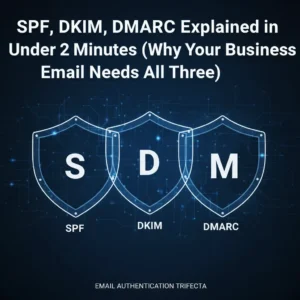
SPF (Sender Policy Framework) tells email servers which IP addresses are allowed to send emails from your domain. Think of it as a guest list for your domain – only approved senders get through.

DKIM (DomainKeys Identified Mail) adds a digital signature to your outgoing emails. It’s like a tamper-proof seal that proves the message really came from you and wasn’t altered in transit.

DMARC (Domain-based Message Authentication, Reporting, and Conformance) combines SPF and DKIM, then tells other email servers what to do with emails that fail these checks. You can set it to quarantine suspicious emails or reject them entirely.

Setting up these protocols requires adding DNS records to your domain. If that sounds intimidating, most hosting providers or IT consultants can handle this quickly. The investment pays off immediately – you’ll see fewer spoofed emails reaching your contacts and customers.

Recognize the New Generation of Phishing Emails

Today’s phishing emails are getting scary good at mimicking legitimate communications. AI helps scammers create perfect grammar, use your company’s writing style, and even reference recent events or conversations.

Watch for these red flags that still give away phishing attempts:

Suspicious sender addresses often use lookalike domains. Instead of “fedex.com,” you might see “fedx-support.com” or “fedex-delivery.net.” Always check the actual sender address, not just the display name.

Urgent language designed to bypass your critical thinking. Phrases like “immediate action required,” “account will be closed,” or “verify within 24 hours” should trigger your skepticism.

Generic greetings like “Dear Customer” instead of your actual name. Legitimate businesses usually personalize their communications, especially for account-related messages.

Mismatched links where the displayed text says one thing but the actual URL leads somewhere else. Hover over links before clicking to see where they really go.

Unexpected attachments requiring immediate download or execution. Be especially wary of .zip files, .exe files, or documents with embedded macros from unknown senders.

Implement Smart Behavioral Practices

Your daily email habits matter more than any security software. Small changes in how you handle emails can prevent most successful phishing attacks.

Never click links in emails unless you absolutely trust the sender. When in doubt, open a new browser window and navigate to the company’s website directly. This simple practice stops most credential theft attempts cold.

Verify suspicious requests through alternative channels. If your “boss” emails asking for urgent wire transfers or sensitive information, pick up the phone and confirm. Scammers count on you following email instructions without verification.

Keep your software updated. Email clients, browsers, and operating systems regularly patch security vulnerabilities that phishers exploit. Enable automatic updates whenever possible.

Use different passwords for different accounts. When one account gets compromised, you don’t want attackers accessing everything else. Password managers make this easier by generating and storing unique passwords for each service.

Deploy Multi-Factor Authentication Strategically

Multi-factor authentication (MFA) blocks most phishing attacks even when criminals steal your password. But not all MFA is created equal in 2025.

Avoid SMS-based authentication when possible. Scammers can intercept text messages or use social engineering to redirect your phone number. It’s better than nothing, but other options provide stronger protection.

App-based authentication using Google Authenticator or Microsoft Authenticator offers better security. These generate time-based codes that work even without internet connectivity.

Hardware security keys like YubiKey provide the strongest protection against phishing. They use cryptographic proof that can’t be phished, even by sophisticated attacks. For businesses handling sensitive data, this investment pays for itself quickly.

Choose the Right Email Security Tools

Modern email security goes beyond basic spam filtering. AI-powered solutions can detect subtle patterns that humans might miss.

Advanced threat protection services analyze email content, sender behavior, and link destinations in real-time. They catch zero-day phishing attempts that haven’t been reported yet.

Email sandboxing opens suspicious attachments in isolated environments to check for malware before they reach your inbox. This protects against document-based attacks that bypass traditional antivirus.

User reporting tools make it easy for your team to flag suspicious emails. Many security platforms learn from these reports, improving protection for everyone.

Link rewriting services intercept clicks on suspicious URLs and scan them before allowing access. This provides a safety net when users click without thinking.

Train Your Team Without Boring Them

Security awareness training works best when it’s relevant and engaging. Skip the generic presentations and focus on real scenarios your business might face.

Run phishing simulations that mimic actual threats targeting your industry. Banking clients might see fake loan notifications, while retail businesses could see shipping updates. Make the training relevant to daily operations.

Create a no-blame reporting culture. Team members should feel comfortable reporting suspicious emails without fear of embarrassment. Praise people for being cautious – it’s exactly the behavior you want.

Share recent examples of phishing attempts targeting similar businesses. Real-world cases are more memorable than theoretical scenarios.

Keep sessions short and focused. Fifteen-minute monthly updates work better than annual marathon training sessions. People retain information better in small, digestible pieces.

Protect Your Business Email Specifically

Business email faces unique threats that personal email doesn’t encounter. Attackers research your company structure, recent news, and business relationships to craft targeted attacks.

Business Email Compromise (BEC) attacks target financial processes. Scammers impersonate executives or vendors to trick employees into wire transfers or credential sharing. Always verify payment requests through secondary channels.

Supply chain phishing uses compromised vendor accounts to attack customers. Even trusted partners can become unwitting attack vectors. Maintain healthy skepticism even with familiar senders.

CEO fraud targets employees with fake urgent requests from leadership. Attackers study your organizational chart and communication patterns to make requests seem legitimate.

Keep Your Defenses Current

Phishing tactics evolve constantly, so your protection strategies must evolve too. What worked last year might not catch this year’s threats.

Monitor your email authentication reports. DMARC generates reports showing who’s trying to send emails from your domain. Review these monthly to catch impersonation attempts early.

Update your security awareness training quarterly with new threat examples. Cybercriminals adapt their tactics based on what works, so your team needs to stay current.

Test your backup and recovery procedures. Even with perfect prevention, some attacks might succeed. Regular testing ensures you can recover quickly without paying ransoms or losing critical data.

Review and update your incident response plan. Everyone should know who to contact and what steps to take when phishing attacks succeed. Quick response can minimize damage significantly.

Take Action Today

Phishing avoidance isn’t something you can set up once and forget. It requires ongoing attention and regular updates. But the effort protects your business reputation, customer data, and financial security.

Start with email authentication – SPF, DKIM, and DMARC records provide immediate protection against domain spoofing. Then implement multi-factor authentication on critical accounts. These two steps alone will block most common phishing attacks.

Train your team to recognize and report suspicious emails. Create processes for verifying unexpected requests through alternative communication channels. The combination of technology and smart human behavior creates a robust defense against even sophisticated attacks.

Remember, cybercriminals are running businesses too. They target victims who look like easy marks and move on when defenses are strong. Make your business a hard target, and attackers will focus their efforts elsewhere.

For additional technical help with email security implementation, check out our email security resources for step-by-step guidance on protecting your business communications.

FacebooktwitterredditpinterestlinkedinmailFacebooktwitterredditpinterestlinkedinmail

The CW Corner – SPF, DKIM, DMARC Explained in Under 3 Minutes (Why Your Business Email Needs All Three)


Two minute explanation of spf, dkim and dmarcThink your business emails are secure? Think again. Every day, cybercriminals send millions of fake emails pretending to be from legitimate businesses. Without proper email authentication, your company name could be next.

Here’s the scary truth: anyone can send an email that appears to come from your domain. Your customers won’t know the difference until it’s too late. That’s where SPF, DKIM, and DMARC come in.

These three protocols work like a security team for your email. Each one handles a different job, and you need all three to properly protect your business reputation.

What Is SPF (Sender Policy Framework)?

SPF acts like a bouncer at an exclusive club. It tells the world exactly which mail servers are allowed to send emails on behalf of your domain.

When you set up SPF, you’re essentially creating a list that says “These servers, and only these servers, can send emails from mydomain.com.” Any email claiming to be from your domain but sent from an unauthorized server gets flagged as suspicious.

Here’s how it works in practice. Let’s say someone tries to send a fake email from your domain using their personal Gmail account. The receiving email server checks your SPF record and sees that Gmail isn’t on your approved list. Red flag raised.

But SPF has one major weakness: email forwarding breaks it completely. When someone forwards your legitimate email to another address, the forwarding server becomes the new sender. Since that server isn’t on your SPF list, the email fails authentication even though it’s genuine.

That’s why SPF alone isn’t enough. You need backup.

Understanding DKIM (DomainKeys Identified Mail)

DKIM works like a tamper-proof seal on a package. Every email gets a unique digital signature that proves two things: the message came from an authorized server, and nobody changed the content during delivery.

Think of DKIM as invisible ink that only special equipment can read. Your mail server adds this signature using a private key that only you control. The receiving server uses a public key (stored in your DNS records) to verify the signature.

If someone intercepts your email and changes even one character, the signature breaks. The receiving server immediately knows something fishy happened.

Unlike SPF, DKIM survives email forwarding because the signature travels with the message. But DKIM has its own blind spot: it doesn’t check if the “From” address matches the domain that signed the email.

A scammer could send an email that appears to come from your domain in the “From” field while actually signing it with their own domain’s DKIM key. The signature would be valid, but the email would still be fake.

DMARC: The Missing Link

DMARC (Domain-based Message Authentication, Reporting & Conformance) is the quarterback that makes SPF and DKIM actually work together effectively.

DMARC connects the dots by checking something called “alignment.” It verifies that the domain in the “From” address matches the domain that passed SPF or DKIM authentication.

But DMARC’s real power lies in policy enforcement. You tell DMARC exactly what to do when an email fails authentication:

  • None: Just monitor and report (perfect for testing)
  • Quarantine: Send suspicious emails to spam folders
  • Reject: Block fake emails completely

DMARC also sends you detailed reports about who’s sending emails using your domain. These reports help you catch both legitimate configuration issues and malicious activity.

How the Three Work as a Team

Think of email authentication like airport security. You need multiple checkpoints to catch different types of threats.

When an email arrives, the receiving server performs this security screening:

  1. SPF Check: Is this email coming from an authorized server?
  2. DKIM Check: Is the digital signature valid and unaltered?
  3. DMARC Check: Do the domains align properly, and what should I do if they don’t?

DMARC requires that at least one of the other protocols (SPF or DKIM) passes AND shows proper alignment. If both fail, DMARC policies kick in to protect the recipient.

This layered approach covers all the bases. Even if SPF breaks due to forwarding, DKIM can still authenticate the email. If DKIM fails for some reason, SPF might still pass.

Why All Three Are Non-Negotiable

You might think “Can’t I just use one or two?” Unfortunately, no. Each protocol plugs holes that the others can’t handle.

Here’s what happens with incomplete protection:

SPF only: Scammers can still forge your domain in the “From” address while sending from their own authenticated servers. Customers see your name and trust the email.

DKIM only: Criminals can use your domain name in emails while signing with their own valid DKIM signature. The technical authentication passes, but the email is still fraudulent.

SPF + DKIM without DMARC: You have no enforcement mechanism. Email providers might ignore your SPF and DKIM records because there’s no policy telling them what to do with failures.

The harsh reality? Without all three protocols properly configured, up to 76% of your legitimate business emails could end up in spam folders or get rejected outright.

The Business Impact Is Real

Major email providers aren’t playing games anymore. Starting in February 2024, Google and Yahoo made SPF, DKIM, and DMARC mandatory for anyone sending over 5,000 emails per day.

But compliance isn’t the only concern. Business Email Compromise (BEC) scams cost U.S. victims $2.9 billion in 2024 alone. When criminals can easily impersonate your business, your customers become targets.

Consider what’s at stake when someone spoofs your domain:

  • Customer trust: People stop opening emails from your business
  • Brand reputation: Your company name gets associated with scams
  • Financial liability: Customers might hold you responsible for losses
  • Email deliverability: Legitimate emails get blocked or filtered

One major breach can take years to recover from. Prevention costs far less than damage control.

Getting Started: Your Next Steps

Don’t let the technical details intimidate you. Most hosting providers and email services can help you implement these protocols correctly.

Start by checking your current status. Tools like MXToolbox or DMARC Analyzer can show you what records already exist for your domain.

If you’re sending business emails without proper authentication, you’re essentially driving without insurance. The question isn’t whether something will go wrong: it’s when.

For comprehensive email security guidance tailored to your business needs, our email security services can help you implement all three protocols correctly.

The investment in proper email authentication pays dividends in protected reputation, improved deliverability, and peace of mind. Your customers: and your bottom line: will thank you for taking email security seriously.

Don’t wait for a crisis to take action. Email authentication isn’t just about preventing attacks; it’s about ensuring your legitimate business communications actually reach their intended recipients.

FacebooktwitterredditpinterestlinkedinmailFacebooktwitterredditpinterestlinkedinmail

The CW Corner – Phishing Scams Explained in Under 3 Minutes: Smishing, Vishing, and the New Tricks You Need to Know

More Phishing ExamplesCybercriminals are getting smarter every day. They’re not just sending those obvious “Nigerian Prince” emails anymore. Today’s scammers use sophisticated tactics that can fool even tech-savvy people.

Let’s break down the three main types of social engineering attacks you need to know about. We’ll cover phishing, smishing, and vishing – plus some sneaky new tricks that emerged in 2025.

What’s the Difference Between Phishing, Smishing, and Vishing?

Think of these three methods as different doors criminals use to break into your digital life. Each one targets a different communication channel you use every day.

Phishing happens through email and fake websites. Scammers impersonate trusted companies like your bank or Amazon. They’ll send urgent messages claiming your account needs immediate attention. The goal? Get you to click malicious links or download infected attachments.

Smishing uses text messages and messaging apps like WhatsApp. These texts often claim your package is delayed or your account is compromised. They include suspicious links that steal your information when clicked.

Vishing involves phone calls or voicemails. Scammers pretend to be from your bank, tech support, or government agencies. They use high-pressure tactics to make you reveal passwords or account numbers over the phone.

How Phishing Really Works (It’s More Clever Than You Think)

Modern phishing emails look incredibly convincing. Scammers copy official logos, use proper grammar, and mirror legitimate company websites perfectly.

Here’s a real example: You receive an email from “PayPal” saying someone tried to access your account. The email looks authentic, complete with PayPal’s logo and formatting. It includes a link to “verify your identity.”

But when you click that link, you land on a fake PayPal login page. The moment you enter your credentials, criminals capture them. Within minutes, they’re accessing your real PayPal account.

The scary part? These fake websites often use HTTPS encryption, so you’ll see that “secure” lock icon in your browser. Don’t let that fool you – criminals can get SSL certificates too.

Smishing: Why Text Message Scams Work So Well

People trust text messages more than emails. We’re conditioned to respond quickly to texts, especially ones that seem urgent.

Smishing attacks often use shortened URLs like bit.ly links. These hide the real destination, making it impossible to see where you’re actually going. The messages create artificial urgency: “Your package will be returned if you don’t respond in 24 hours!”

Here’s what makes smishing particularly dangerous: Most people don’t have security software on their phones like they do on computers. This makes mobile devices easier targets for malicious websites and downloads.

Think about how many important accounts are linked to your phone number. Your bank, email, social media – they all send verification codes via text. Criminals know this and exploit it ruthlessly.

Vishing: The Human Touch That Breaks Down Your Defenses

Voice phishing feels the most personal and urgent. There’s something about hearing another person’s voice that makes threats feel real and immediate.

Skilled vishers study their targets beforehand. They might know your name, where you bank, or recent purchases you’ve made. This inside knowledge makes their calls incredibly convincing.

Caller ID spoofing makes these calls appear to come from legitimate numbers. Your phone might display your bank’s actual customer service line, even though the call is coming from a criminal’s burner phone.

The pressure tactics are intense. They’ll claim your account has been compromised and you need to verify information “right now” to prevent further damage. They might transfer you between different “departments” to make the scam feel more authentic.

The New Tricks Criminals Started Using in 2025

Artificial Intelligence changed the game completely. AI-powered phishing creates personalized messages that perfectly mimic your colleagues’ or friends’ writing styles. These aren’t generic scam emails – they’re tailored specifically for you.

Clone Phishing takes emails you’ve actually received before and creates malicious copies. Remember that legitimate email from your bank last month? Criminals recreate it exactly, but replace the links with dangerous ones. Since you recognize the format, you’re more likely to trust it.

Business Email Compromise (BEC) targets companies by impersonating executives. An employee receives an email that appears to come from their CEO, requesting an urgent wire transfer or asking for sensitive customer data. These attacks often don’t include any attachments – they rely purely on social manipulation.

Deepfake voice technology now lets criminals clone someone’s voice from just a few minutes of audio. They might call pretending to be your boss, using AI-generated speech that sounds exactly like them.

Red Flags That Scream “This Is a Scam”

Your gut instinct is often right. If something feels off, it probably is. Here are specific warning signs to watch for:

Urgent language designed to bypass your critical thinking. Phrases like “immediate action required,” “account will be closed,” or “respond within 24 hours” are huge red flags.

Requests for sensitive information through email or text. Legitimate companies never ask for passwords, Social Security numbers, or account details this way. They already have this information.

Generic greetings like “Dear Customer” instead of using your actual name. Real companies typically address you personally in important communications.

Shortened URLs or suspicious links. Hover over any link before clicking to see where it actually goes. Be especially wary of URLs with random characters or unfamiliar domains.

Grammar and spelling mistakes in messages from “professional” organizations. While scammers have gotten better at this, many still make obvious errors.

Your Defense Strategy: Simple Steps That Actually Work

For email phishing: Never click links in suspicious emails. Instead, go directly to the company’s website by typing their URL into your browser. If the issue is real, you’ll see it when you log into your account normally.

For smishing: Don’t click text message links from unknown numbers. If the message claims to be from a company you do business with, use their official app or website instead.

For vishing: Hang up and call back using the official number from the company’s website. Real representatives won’t mind you verifying their identity this way.

Enable two-factor authentication (2FA) on all important accounts. Even if criminals steal your password, they won’t be able to access your accounts without the second verification step.

Keep your software updated. This includes your operating system, web browser, and antivirus programs. Updates often fix security vulnerabilities that criminals exploit.

When in Doubt, Verify Through a Different Channel

Here’s the golden rule: If someone contacts you claiming there’s a problem, verify it independently. Don’t use the contact information they provide – look it up yourself.

Call your bank using the number on your debit card. Log into your accounts directly rather than clicking email links. Check with IT before responding to urgent requests from “executives.”

This simple habit will protect you from 99% of social engineering attacks. Criminals count on you responding immediately without thinking it through.

Protecting Your Business and Family

Share this information with your employees and family members. Cybercriminals often target less tech-savvy individuals to get access to business networks or family finances.

Create a family or workplace policy: Never give out sensitive information over the phone or via email without verification. Make it clear that taking time to verify suspicious requests is always acceptable.

Consider using a password manager and teaching others to do the same. This makes it much harder for criminals to access multiple accounts even if they steal one password.

Remember, you don’t have to become a cybersecurity expert to stay safe. Following these basic guidelines and trusting your instincts will keep you ahead of most scammers.

If you’re concerned about your business’s email security or need help implementing better protection policies, our email security consulting services can help you create a comprehensive defense strategy.

The key is staying informed and remaining skeptical of unsolicited contacts asking for information or immediate action. When criminals can’t pressure you into quick decisions, their tactics usually fail.

FacebooktwitterredditpinterestlinkedinmailFacebooktwitterredditpinterestlinkedinmail

The CW Corner – Adding Akismet comment spam protection

Akismet provides a convenient and free way to protect your personal WordPress site or blog from spam.

Many times we’d like to allow comments to be left on our WordPress site. The hassle with this can be the tremendous amounts of spam that come through the forms on websites.

Akismet is a compact WordPress plugin that filters the incoming comments. It is pretty straightforward to use and pretty easy to set up as well.

Install the Akismet plugin

The first step in this process is to ensure that the Akismet plugin is installed in your WordPress website:

      • Log into your WordPress website’s dashboard as an administrator
      • Click on Plugins in the left dashboard navigation column
      • Look and see if Akismet is listed – if it is – and it is not activated you can proceed to the Akismet Setup step below – otherwise
      • Click on Add New under Plugins in the dashboard navigation column
      • If you don’t see Akismet in the plugins, then in the text box to the right of the work Keyword in the row starting with Featured type in Akismet – then click on its Install Now button. Do not activate it yet.

Perform the Akismet Setup

To set up Akismet in your website, you will need an API code from the Akismet site. The first step in that process is to navigate to:
https://akismet.com/plans

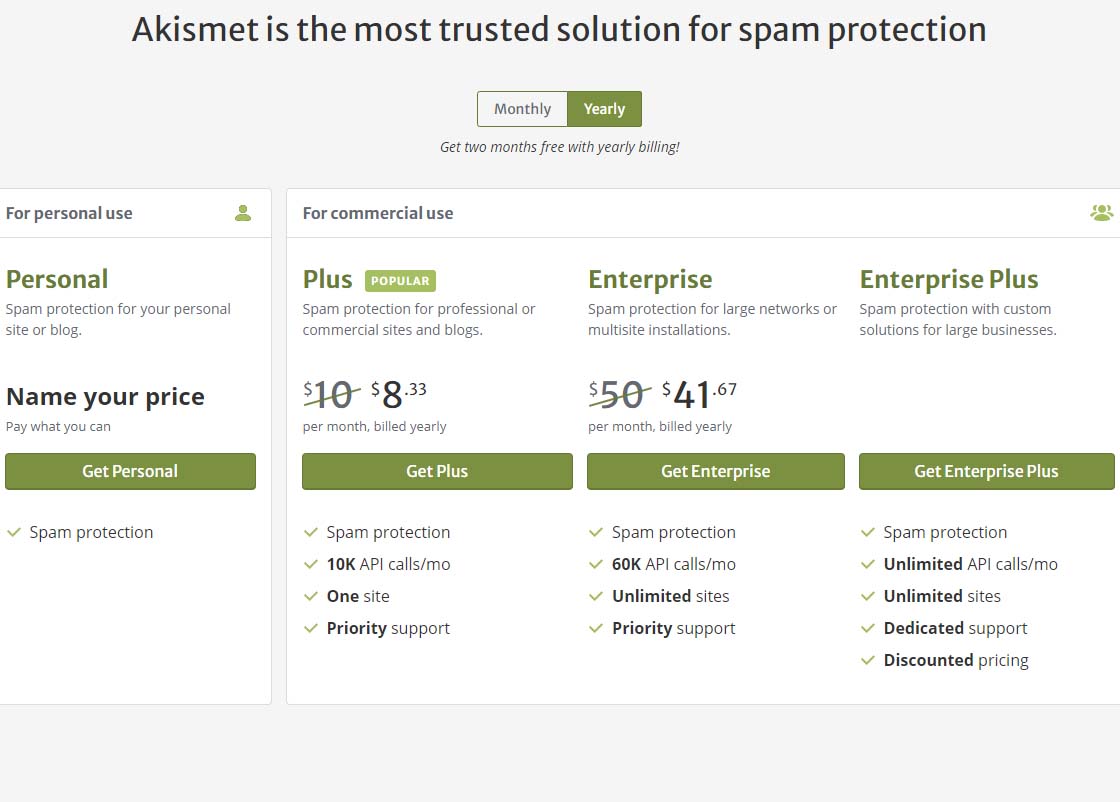
This (as of the time of this writing) brings you to a page that should look similar to the screenshot below.

Akismet offering pricing page

Akismet offering pricing page

To get the free version of Akismet comment spam protection, you will need to click on the Get Personal button on the above page.

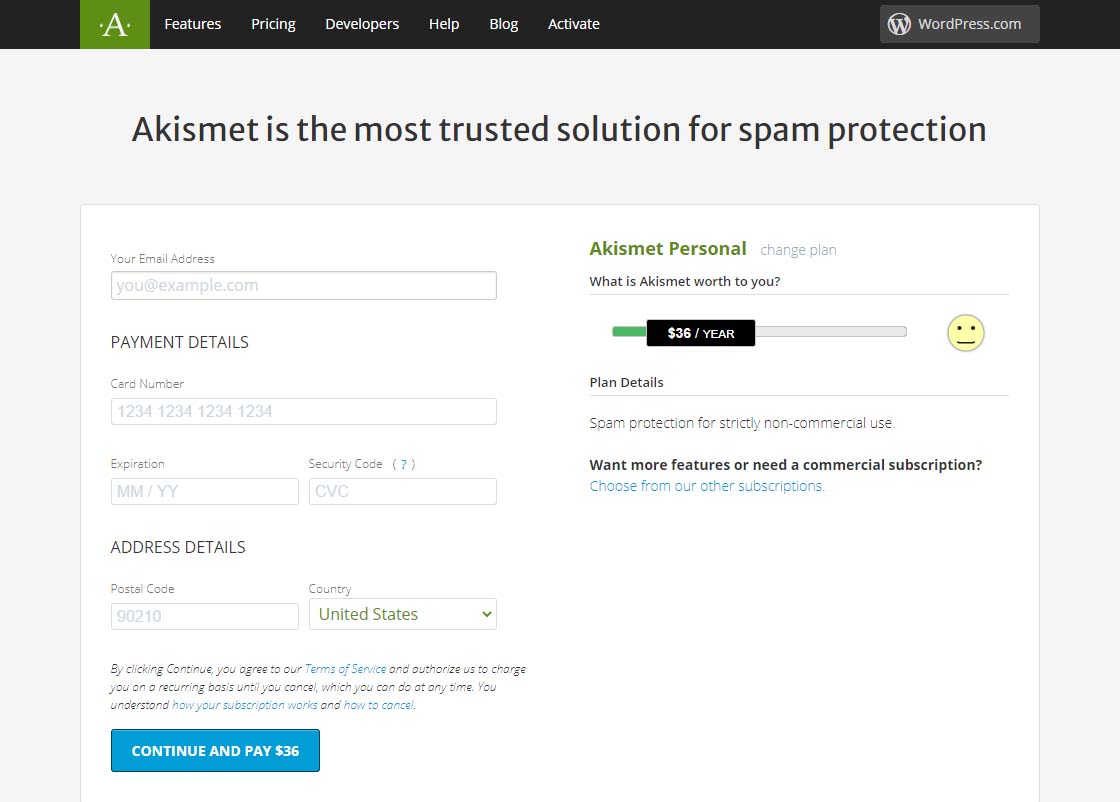
Once you’ve done that, you should see a page similar to the one below. Before attempting to fill out anything on this page, we need to set that $36 / YEAR to $0 / YEAR. Click on the $36 / YEAR box and drag it to the left.

Akismet Default $36 per year page

Akismet Default $36 per year page

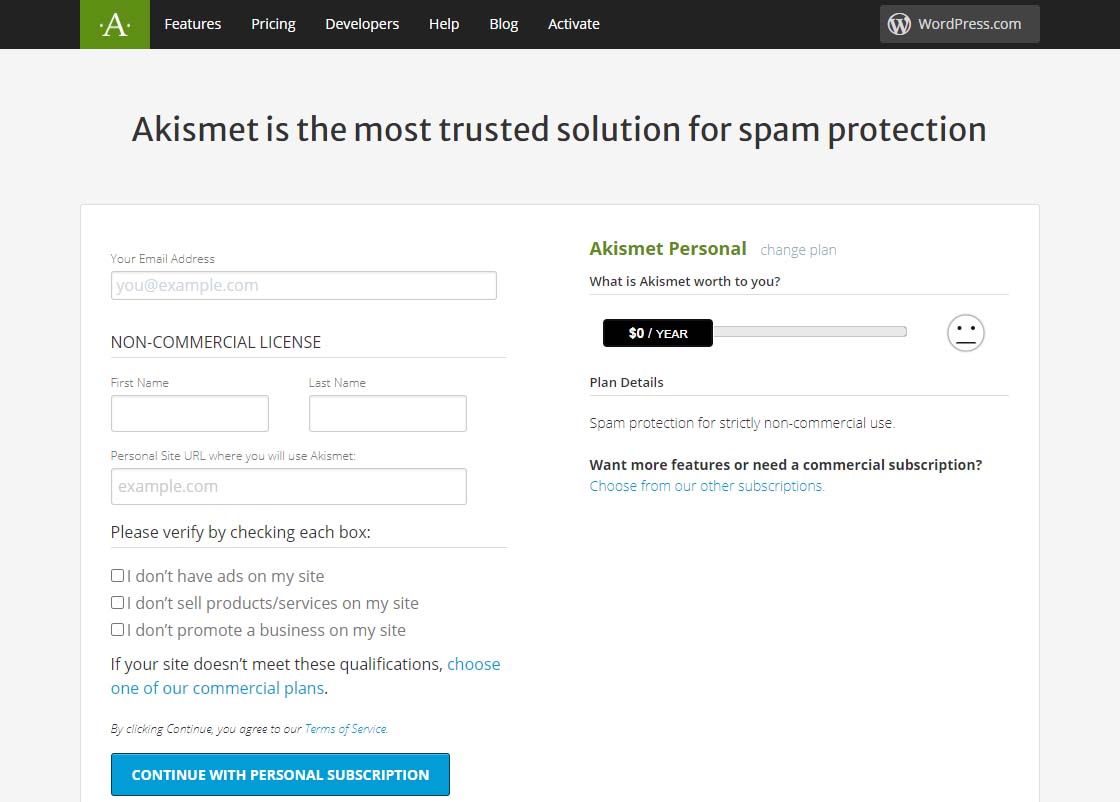
Dragging that $36 / YEAR box to the left should change the page to display something like the one below showing 0$ / YEAR. You can also see that the information to fill in has changed.

Akismet $0 per year page

Akismet $0 per year page

Akismet $0 per year page

Now fill in the information completely. Note that you need to be able to check all three checkboxes indicating the following:

      • you don’t have ads on your site
      • you don’t sell products/services on your site
      • you don’t promote a business on your site

If these are the case, then you will qualify for a free, personal plan.

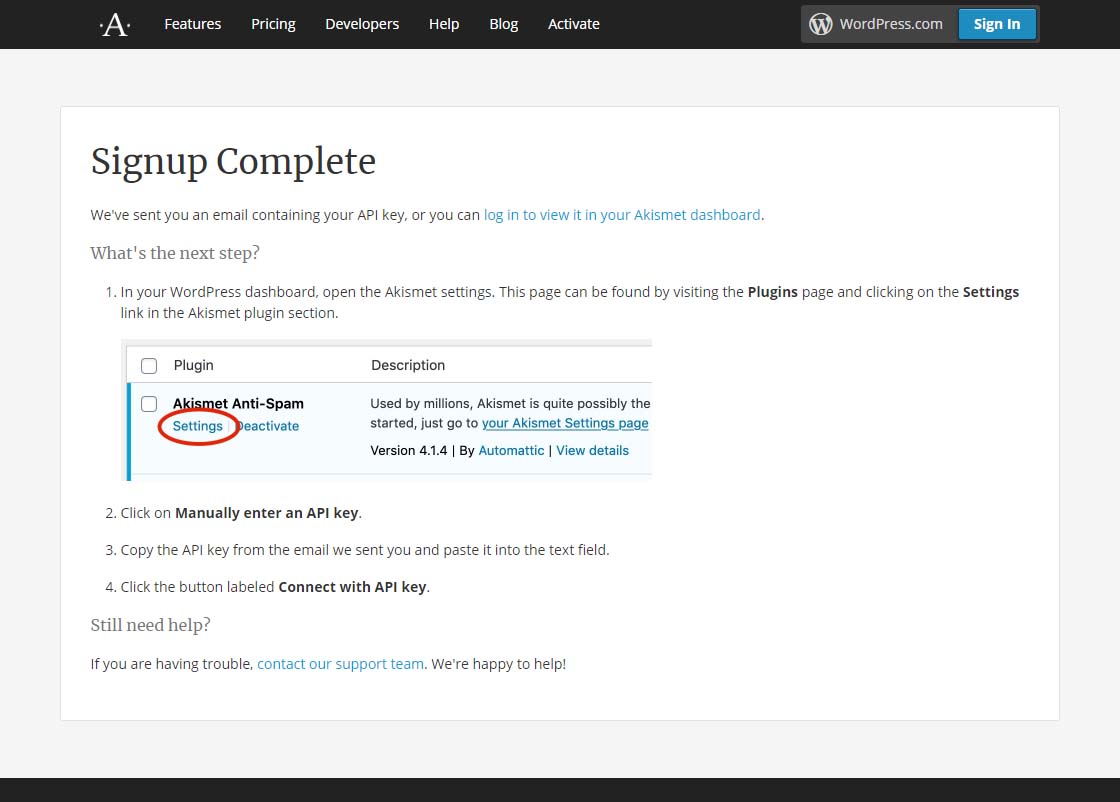
All you have to do once you have gotten this far is follow the directions on the page below.

Akismet signup complete page

Akismet signup complete page

Finally, it is suggested that while on that settings page in Akismet, you can choose to show the number of approved comments beside each comment author and choose whether to show a privacy notice or not. Then just click the Save Changes button and you are on your way!

FacebooktwitterredditpinterestlinkedinmailFacebooktwitterredditpinterestlinkedinmail