by Charles Oropallo | Mar 4, 2020 | Domains, Internet, Monadnock Shopper News, Security, Shopper News, The CW Corner
Explained really simply, domain names are just pointers that convert recognizable words or characters to Internet addresses so we can view a website. Whenever a domain name is created, its creation date and expiration date are publicly available.
There are many domain scams out there. A rather common one I often see is where an unscrupulous company tries to overcharge you for your domain name and get control of it.
The main way they do this is by first scaring you into thinking you might lose your domain name because it is expiring. They do this by sending a carefully crafted letter to you through the postal service. The message appears at first glance to resemble an invoice convincing you to renew your domain name with them. These messages are very convincing.
Reading the “invoice” carefully actually reveals it states it is not an invoice – but in fact it is an “offer”. That statement is what keeps it “legal”. Amazingly, some of the companies that trick domain owners like this have been prohibited from operating in Canada after being legally challenged by the Canadian government.
My advice is to always check with your domain provider when presented with anything appearing to be a bill that appears suspicious. It will save you a lot of headaches going forward.


by Charles Oropallo | Feb 5, 2020 | Do-It-Yourself, Email, Internet, Monadnock Shopper News, Passwords, Security, Shopper News, The CW Corner, Website Development
I’ve written several articles about specific scams that are occurring on a regular basis on the Internet. They seem to subside for a short time – a very short time – and then a wave of them happens again.
One of the worst – as far as I am concerned – are the ones where the email recipient is being told they must verify their email. These have some common traits with most Internet scams:
1) A sense of urgency – they want you to take care of this immediately
2) A time limit – they give you within 24 hours to act
3) A threat – they tell you your email will be locked.
The first thing you have to understand is that nearly everyone gets these on occasion. I have received them myself in which they are made to look like they are from CharlesWorks. So when our clients get these they tend to become very worried very quickly.
I can’t stress enough that most legitimate companies will not send out messages like these. To fall prey to these can be a real nightmare. With access to one’s email these days the bad guys can wreak havoc in one’s life. The worst cases are called identity theft!
Don’t be the unfortunate one who falls prey to these scammers. If you have been “notified” of something serious – call your provider up and speak with a representative. Just like at my company – it’s a lot easier for us to allay your fears than to have to try to clean up the mess that can happen with compromised accounts.
by Charles Oropallo | Oct 30, 2019 | Email, Internet, Monadnock Shopper News, Shopper News, The CW Corner
It’s Halloween time again so I thought I’d mention Halloween Spoofs! Well, actually email spoofing happens year round.
 An example of spoofing is when emails are sent that are addressed from you (and maybe to you) but you didn’t send them. In that case your address has been “spoofed”.
Spammers and scammers alike do this. There are a couple reasons it’s done.
Sometimes it is malicious. Let’s say someone goes onto numerous websites to sign up for information as XYZ Company. So a ton of spam is sent to XYZ. XYZ finds itself barraged with email and phone spam – wasting lots of their time.
More often XYZ is spoofed to appear to be the sender of spam. Folks local to XYZ are more likely to open the spoofed emails. The spam really isn’t from XYZ – just made to look like it is. So recipients think XYZ is spamming them. They’re annoyed with XYZ and report them as spammers and complain and so on.
Fortunately, spoofing doesn’t account for most Internet issues. It just makes life miserable for XYZ – the target – for a while.
The good news is that usually spoofing usually only lasts a few days. The actual sending server is identified and blocked or shut down.
Always report these issues to your email administrator. Early intervention saves lots of headaches in the long term.
by Charles Oropallo | Oct 2, 2019 | Internet, Monadnock Shopper News, Security, Shopper News, The CW Corner, Website Development
Website visitor safety is extremely important. I’ve mentioned terms here before like SSL, encryption, security and so on.  These involve that little green or grey lock in front of the web address in your browser. Clicking on that tells you whether the encryption is valid and what site it’s issued to.
Providing encryption was traditionally expensive for website operators. However, it can be had for free these days. There’s no reason not to have it.
Encryption refers to a method on website servers that helps ensure you are actually on the website you think you are on. This greatly reduces the risks of fraud.
Ripping you off is a top priority for many nefarious individuals and organizations on the web. One method is tricking you into giving your credit card or other personal information on a “fake” site or web page. These pages often look exactly like those of your bank’s or credit card company’s or even your email’s login pages.
There’s usually a small one-time charge for initial setup. Website owners should check with their hosting company or web developer to ensure website encryption (SSL) is included in their monthly hosting at no extra charge. If need be, it’s worthwhile to move to a company whose hosting provides this.
by Charles Oropallo | Sep 18, 2019 | Internet, Monadnock Shopper News, Shopper News, The CW Corner
When working in the web world as I do, Internet scams appear to be everywhere.
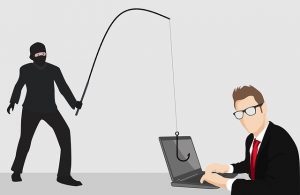
Phishing is defined as the act of attempting to trick the recipient of a malicious email into opening and engaging with it.
It’s amazing how people fall for phishing scams. They fall for them mostly because the emails are designed to appear like the writer isn’t too bright. So immediately the recipient thinks they have the upper hand. Many count on the recipient’s greed – believing they’ll get something for nothing.
The bad guys that develop these schemes are experts. All they do is work scams – day and night. They wouldn’t continue if it didn’t pay off in the long run.
I read someplace that billions of dollars annually are conned out of people through the various scams out there on the Internet. For the most part – I hate to say – they can’t be stopped. They are sent from all types of email addresses, all types of servers, from all over the world.
Bottom line is that you should keep deleting them. The best course of action is to stop responding to them and opening them. Report them as spam or report them as phishing attempts. Your email provider may provide insight with how to do this. They will ultimately stop coming.
Remember that if the bad guys can’t trick you into parting with your money they will focus on someone else – until they find someone who does. Just don’t be that someone.










 European Union General Data Protection Regulation Compliant